The PaleoBRAIN project is financed by the French research agency (ANR-20-CE27-0009 and ANR-25-CE27-5686) and is structured in two parts:
Bringing the brain of Homo erectus and Neandertals back to life
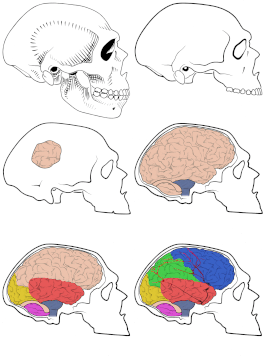
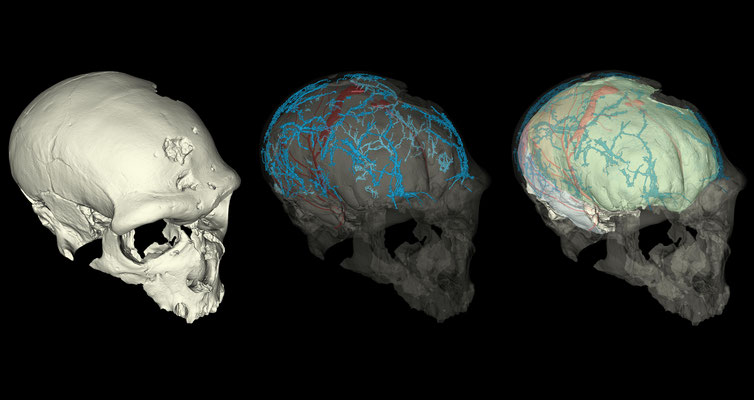
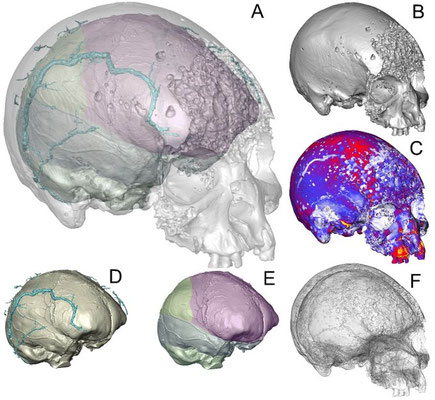
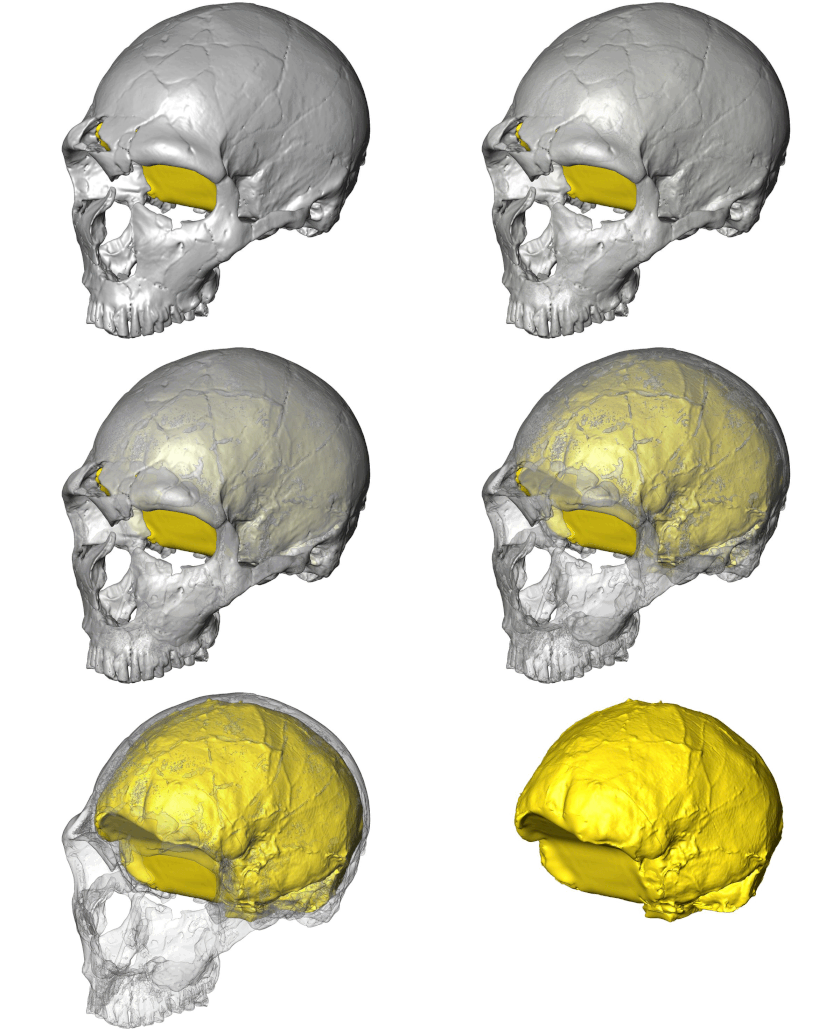
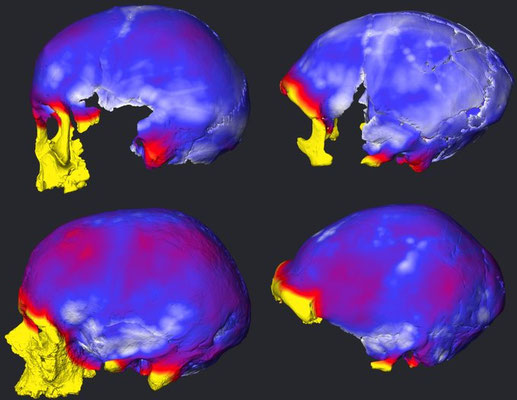
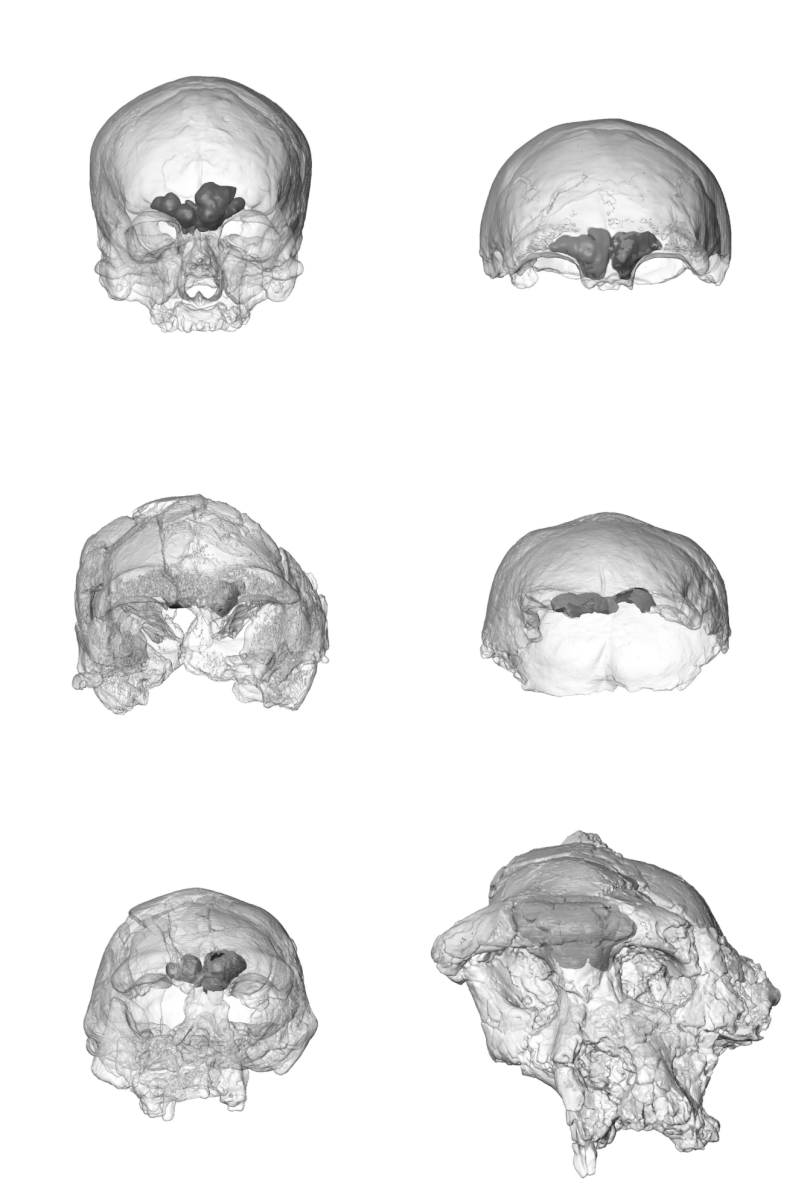
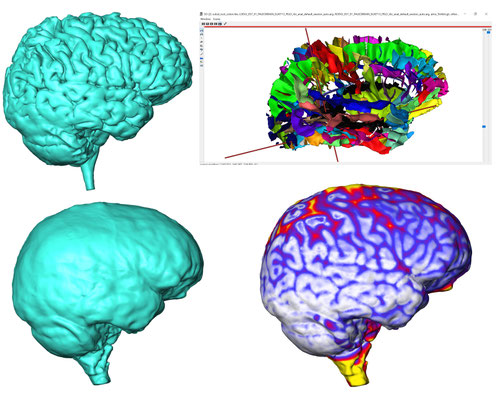
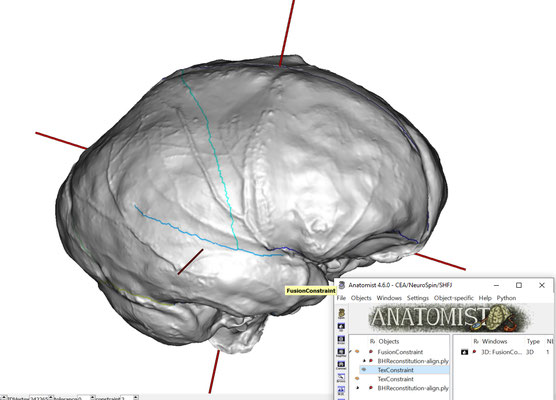
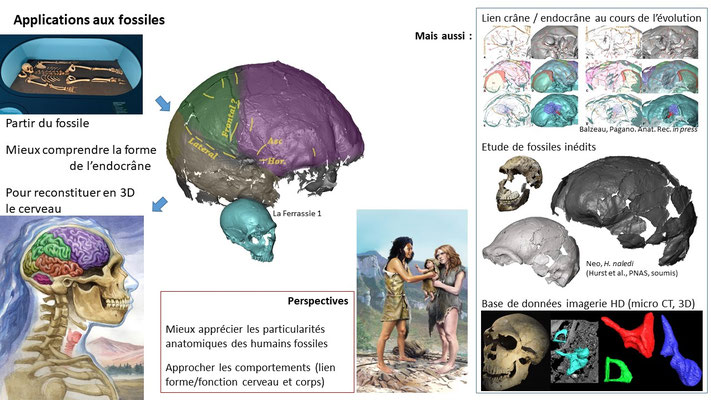
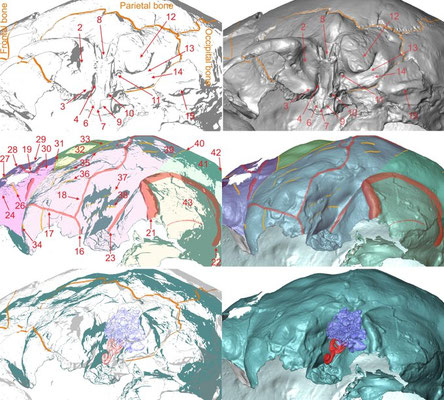
The question of the correspondence between cerebral and endocranial features is crucial for applications in palaeoneurology and has never been addressed before this project. To do so, we have investigated for the first time the correlation between the shapes of the brain and the endocast within a sample of modern humans using MRI acquisitions, including some with a specific sequence (UTE) that allows the characterisation of bone tissues. This input was decisive for detailed study of neurological information from fossil humans. Indeed, this original evidence allowed us to reconstruct with a scientifically robust and precise methodology the preserved shape and anatomy of the brain of key fossil specimens.
Let’s make the prehistoric human brain talk
Prehistoric behaviours are documented by direct evidence in the archaeological record such as tools, objects with a symbolic significance, or cave paintings. However, these clues of cognitive capacities do not provide any information on the brain functioning of our ancestors. The next step of our project is to investigate how those brains may differ in terms of anatomy and function compared to our own brain!
Because behaviour and cognitive abilities are best studied on living individuals, we have conducted a unique in vivo experience. Complementary MRI data of the head and detailed tests of behavioural laterality were collected on a large sample of volunteers and remains to be exploited during this new project. The analysis of this original database will bring new light to our knowledge of biological and behavioural asymmetries and provide new perspectives to characterise and interpret the features of prehistoric humankind. In this context, we have a new and previously unreachable objective. In PaleoBRAIN2, we aim to decipher the relationship between anatomy and behaviours such as lateralisation, manual preference, and
manual dexterity in fossil hominins.
The detailled tasks of our ongoing project (2026-2030) are described below.
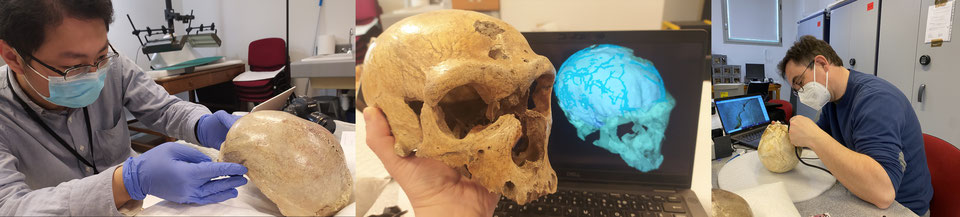
The main scientific tasks of our new project (ANR-25-CE27-5686) are:
Task 1: Behavioural lateralisation and biological asymmetries in living humans.
75 volunteers have taken part in: (1) experiments measuring hand strength (grip and pinch strength) and shape; (2) experiments measuring dexterity in both hands; (3) the ‘dichotic-listening test’; (4) the ‘visual test’ to determine the dominant eye. Our aim was to detail the different behaviours in relation to the anatomy of hands and arms of participants as well as in relation to their lifestyle factors. Moreover, we have performed several MRI acquisitions for every volunteer. Anatomical 3D T1 MPRAGE and UTE (Ultrashort Echo Time) allow anatomical comparison between the brain, skull and endocast, including degrees of bilateral variation. Resting functional MRI will be used to characterise specific networks, including sensorimotor, visual and auditory networks. DTI sequences for tractography will permit to characterise the extension of tracts between motor areas. Finally, we will acquire functional near-infrared spectroscopy (fNIRS) data on the same volunteers while performing tasks of tool preparation and utilisation. These data will be analysed to investigate the degree and extant of correlation between hand preference, anatomical asymmetries of the arm and brain anatomical lateralisation at the individual scale and among a sample.
Task 2: New opportunities from the neuroimaging field.
3 main ideas will be explored to propose unique interactions between neuroimagery and human evolution. 1) Using the unique Whole Body 11.7T MRI at NeuroSpin to improve the spatial resolution of MR brain and of the skull anatomy as seen on endocasts of living humans. 2) explore the potential of UTE using Sparkling approach on fossil specimen without any irradiation. This last topic is crucial for questions around ethics in cultural heritage. Indeed, X-ray tomography affects dating methods based on the quantification of radiation dose accumulated by materials (e.g., ESR) and may have other impacts (change of colorations or damage of ancient DNA at high doses). The11.7T MRI at NeuroSpin is the only scanner at this magnet field capable to image an entire fossil skull. These two innovative tracks will be world premieres. 3) Explore tools of the field to better analyse ‘paleo-brains’ including a foundation model dedicated to modelling the variability of cortical folding. We will work collaboratively on the adaptation of analytical tools from the neuroimaging field to the study of the brain of fossil hominins we have reconstructed.
3. Task 3: Applications to hominins: taphonomy, anatomy and bilateral variation of the body.
We will study fossil skeletons exhaustively (PD2): the most complete H. neanderthalensis specimens (La
Chapelle-aux-Saints 1, La Ferrassie 1 and 2, Spy II, La Quina H5) and four Upper Palaeolithic H. sapiens from the Cro-Magnon and (Abri) Pataud rockshelters. This will constitute an invaluable
source of information about life history for each individual in a sample with specimens of various ages, sexes and species.
Task 4: Integration of the results, implications for the study of the emergence of the human cognition.
Our purpose is not to directly relate past complex behaviours with the shape of specific areas on fossil endocasts but to establish a solid scientific framework to analyse together for the first time the relationships between brain and post-cranial asymmetries in past humans and explore functional, behavioural implications thanks to the study performed on living humans. The comparison between contemporaneous specimens from two species is crucial to approach our differences and similarities in the link between biology and behaviours. Applications on other species will be possible later, but our analyses on the selected sample will need the four years of the project. These data will contribute to approach important topics about evolution, including the understanding of the differences between H. neanderthalensis and H. sapiens, of their respective adaptation to a bipedal locomotion and to a big brain. In addition, we will bring strong anatomical support to deal with questions around the topic of cognition, including hand preference and other lateralised function such as language.